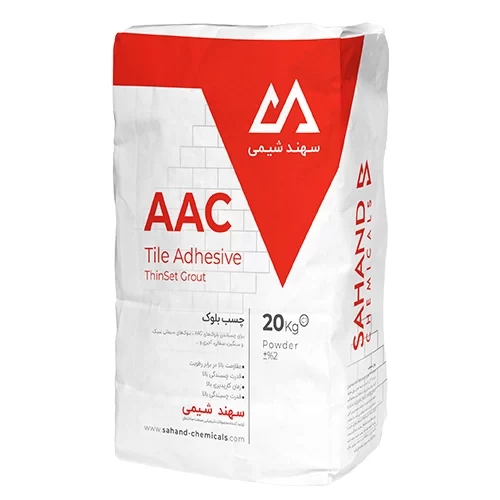




Cement-based mortar
Modern construction relies on cement-based mortar to provide superior bonding strength and structural stability through advanced powder-based formulations. These specialized mixtures replace traditional pastes by combining cement with precise mineral and polymer additives to ensure high-performance results in various masonry tasks.
Sahand Chemicals develops these high-quality binders to facilitate rapid execution and long-term durability in professional building projects. You can achieve faster installation speeds and reduced structural weight by utilizing these optimized chemical compositions for specialized applications like AAC block bonding.
Technical advantages of modern cement-based mortar
Modern cement-based mortar provides superior bonding strength through a controlled cement hydration process, ensuring structural stability. Understanding the difference between cement mortar and concrete helps engineers select the right material for fine-grained adhesion tasks.
Specialized cementitious tile adhesive formulations offer higher consistency than traditional pastes. This precision reduces material waste and improves installation speed for complex masonry projects.
Superior adhesion of polymer-modified mortar
Polymer additives improve cement mortar performance by creating a continuous film within the microscopic pores of the binder. This chemical integration bridges the gap between the substrate and the mortar, preventing the debonding issues common in traditional mixtures.
The integration of a polymer-modified mortar ensures that the material maintains flexibility under thermal expansion. This characteristic prevents cracks from forming during temperature fluctuations, which protects the structural integrity of masonry joints.
| Feature | Impact on Construction |
|---|---|
| Polymer Film Formation | Enhanced bond strength to porous surfaces |
| Elasticity Increase | Reduced risk of shrinkage cracks |
| Water Retention | Consistent hydration for long-term durability |
High-performance binders from Sahand Chemicals utilize these advanced additives to ensure reliable adhesion in thin-layer applications. Such stability allows for faster installation of heavy blocks without the risk of sliding or separation.
Essential chemical components and mineral admixtures
Achieving structural integrity requires a precise balance of chemical and physical constituents within the cement-based mortar. The synergy between binders and additives determines the final mechanical properties of the masonry bond.
Specific cement mortar compositions dictate the workability and long-term durability of the construction site. Engineers optimize these mixtures by adjusting the sand-to-cement ratio to ensure sufficient density and minimize shrinkage during the curing phase.
| Component Type | Functional Role |
|---|---|
| Cementitious Binders | Provides the primary structural matrix and hydration strength. |
| Mineral admixtures | Enhances packing density and reduces permeability. |
| Fine Aggregates | Controls the volumetric stability and reduces cost. |
Integrating various mineral admixtures into the mix fills microscopic voids, which significantly increases the compressive strength of the final application. Precise control over the sand-to-cement ratio allows for tailored viscosity, facilitating easier application for large-scale masonry projects.
Primary applications in modern masonry works
High-performance cement-based mortar serves diverse masonry roles, including specialized mortar for joint grouting to ensure structural stability. Efficient construction workflows rely on purchasing AAC block adhesive to bond lightweight blocks with minimal thickness.
The versatility of cement-based mortar applications optimizes building speed and durability across various masonry projects.
High-performance AAC block adhesive solutions
Sahand Chemicals provides specialized solutions for installing autoclaved aerated concrete (AAC) blocks in both interior and exterior wall systems. High adhesion strength at low thicknesses enables rapid structural execution while reducing the overall building weight.
Selecting the right material requires understanding specific environmental demands, such as: How to choose the right AAC block adhesive for exterior walls? Professionals prioritize resistance to thermal expansion and moisture penetration to ensure long-term stability. Choosing a high-performance binder prevents cracks in the masonry joints during temperature fluctuations.
Reliable procurement of specialized materials simplifies the construction process for large-scale projects. Making the decision to purchase AAC block adhesive ensures that the bonding layer remains durable under various mechanical stresses.
Procurement guide for high-quality binders
Selecting the right binder involves evaluating the chemical stability and particle size distribution to ensure long-term structural integrity. A reliable buying guide for cementitious adhesives emphasizes checking the ratio of polymer additives to mineral fillers, as this balance determines the workability and bond strength of the final application.
High-quality procurement requires verifying that buying powdered tile and stone adhesive meets specific technical standards for water retention and flexural strength. Professionals often compare various types of powder adhesives to determine which formulation minimizes shrinkage and maximizes adhesion for specific substrates like AAC blocks or ceramic tiles.
Cost-effectiveness stems from selecting products that offer high coverage per bag and reduced labor time through easy mixing. Integrating Sahand Chemical products into your supply chain provides access to standardized formulations designed for consistent performance across large-scale masonry projects. Reliable high-quality cement mortar procurement ensures that the bond between different building elements remains stable under mechanical loads and environmental changes.
Contact Sahand Chemicals for customized formulations
Technical consultations and bulk procurement requests for specialized construction materials are available through our engineering department. We provide tailored chemical solutions to meet specific structural requirements and project-scale demands.
Our engineers assist in optimizing mix designs to ensure compatibility with various substrates. You can access a wide range of Sahand Chemical products to facilitate efficient masonry and bonding processes on-site.
Direct communication with our technical team facilitates the acquisition of precise formulations. This support helps minimize material waste and ensures the long-term stability of your construction projects.
Frequently Asked Questions
What is the difference between cement-based mortar and concrete?
The primary distinction lies in the aggregate size and functional purpose of the mixture. Concrete contains larger coarse aggregates to provide structural volume, whereas the difference between cement mortar and concrete is defined by the use of fine sand in cement-based mortar to ensure high adhesion and workability for bonding tasks.
How do polymer additives improve cement mortar performance?
Polymer additives improve cement mortar performance by forming a continuous microscopic film within the pore structure of the cementitious matrix. This film enhances mechanical properties such as flexural strength and water resistance to ensure long-term structural stability. These organic compounds bridge the gaps between cement particles, significantly increasing the bond strength and flexibility of the final mixture.
Is Sahand Chemicals cement-based mortar suitable for AAC blocks?
Sahand Chemicals produces a specialized AAC block adhesive designed specifically for the precise installation of autoclaved aerated concrete units. This formulation ensures high adhesion strength even at low application thicknesses, facilitating faster structural execution and reducing overall building weight. The powder-based composition allows for efficient preparation and long-term durability in both interior and exterior masonry applications.